Insulation Papers for Electric Motors: Materials, Functions, and Selection Guide
Electric motors are widely used in industrial automation, power generation, HVAC systems, electric vehicles, and household appliances. One of the most critical yet often overlooked components in motor design is insulation paper. Proper motor insulation not only ensures electrical safety but also directly affects motor efficiency, service life, and thermal stability.
This article provides a comprehensive overview of insulation papers used in electric motors, covering common materials, core functions, and practical selection guidelines for engineers and procurement professionals.
1. Why Insulation Paper Is Essential in Electric Motors
Inside an electric motor, windings, stator slots, and conductors are exposed to electrical, thermal, mechanical, and environmental stresses. Insulation paper plays several vital roles:
• Electrical insulation: Prevents short circuits between windings, phases, and grounded metal parts
• Thermal protection: Withstands continuous operating temperatures and thermal aging
• Mechanical support: Maintains winding structure under vibration and centrifugal forces
• Dielectric reliability: Ensures stable performance under high voltage and frequency conditions
Without properly selected insulation paper, motors are more prone to overheating, insulation breakdown, and premature failure.
2. Common Insulation Paper Materials for Electric Motors
Different motor designs and insulation classes require different paper materials. Below are the most commonly used insulation papers in motor manufacturing.
2.1 Polyester Film (PET) and Composite Papers
PET film is widely used due to its good dielectric strength and mechanical stability. However, PET alone has limited heat resistance, so it is often combined with other materials.
Typical composites include:
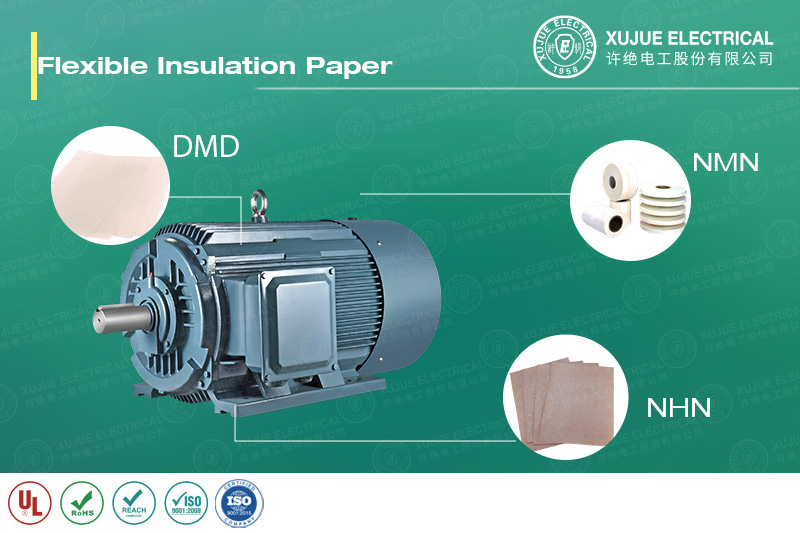
DMD (Polyester non-woven + PET film + Polyester non-woven)
NMN (Nomex® + PET film + Nomex®)
NHN (Nomex® + PET film + Nomex® with enhanced thermal class)
These composite insulation papers offer improved thermal endurance and flexibility, making them suitable for slot liners, phase insulation, and interlayer insulation.
2.2 Aramid Paper (Nomex® Equivalent)
Aramid insulation paper is known for its high thermal class (Class H / 180°C) and excellent dielectric performance. It is commonly used in:
• High-temperature motors
• Inverter-duty motors
• Traction motors and EV motors
Aramid paper maintains insulation integrity even under long-term thermal stress, making it ideal for demanding applications.
2.3 Electrical Pressboard and Cellulose-Based Papers
For certain motor structures and auxiliary insulation, electrical-grade cellulose papers and pressboard are still widely used.
Key characteristics include:
• Good oil absorption (for oil-cooled systems)
• Stable dielectric properties
• Cost-effective for standard motors
These materials are often applied in low- to medium-voltage motors where operating temperatures are moderate.
3. Functions of Insulation Paper in Motor Structures
Insulation paper is used in multiple locations inside a motor, each serving a specific function:
• Slot liners: Isolate windings from stator core laminations
• Phase insulation: Separate different phases of windings
• Inter-turn insulation: Prevent short circuits between conductor layers
• Wedge insulation: Secure windings inside stator slots
• Each application may require different thicknesses, flexibility, and thermal ratings.
4. Insulation Classes and Temperature Ratings
Selecting the correct insulation paper requires understanding motor insulation classes, which define maximum allowable operating temperatures:
|
Insulation Class |
Max Temperature |
|
Class B |
130°C |
|
Class F |
155°C |
|
Class H |
180°C |
For example:
• DMD insulation paper is commonly used in Class B and F motors
• NMN / NHN aramid composites are suitable for Class H motors
• Choosing an insulation paper below the required thermal class can significantly shorten motor lifespan.
5. How to Select the Right Insulation Paper for Electric Motors
When selecting insulation paper, engineers and buyers should consider the following factors:
• Operating temperature and insulation class
• Voltage level and dielectric requirements
• Mechanical stress and vibration conditions
• Compatibility with varnish, resin, or impregnation systems
• Compliance with IEC, NEMA, or UL standards
In high-efficiency motors or inverter-driven applications, insulation materials must also withstand partial discharge and fast voltage rise (dv/dt).
6. Conclusion
Insulation paper is a fundamental component in electric motor design, directly impacting safety, efficiency, and durability. From PET-based composites to high-performance aramid papers, each material serves specific motor requirements.
By understanding insulation materials, their functions, and selection criteria, manufacturers and procurement teams can make informed decisions that improve motor reliability and long-term performance.
For modern motors operating under higher temperatures and electrical stress, investing in the right insulation paper is not a cost — it is a necessity.