CNC Machining Insulation Materials Selection Guide: From Theory to Practical Solutions
In precision manufacturing, choosing the right insulation materials for CNC machining is not just a material decision—it directly impacts machining quality, dimensional accuracy, tool life, and long-term product reliability.
Unlike metals or standard plastics, most electrical insulation materials feature fiber-reinforced and laminated structures, which behave very differently under cutting forces and thermal stress. Poor material selection often leads to machining defects, high scrap rates, and increased production costs.
This guide provides a practical, production-oriented approach to selecting the right insulation materials for CNC machining, helping manufacturers reduce risk and improve efficiency.
Why Material Selection Matters in CNC Machining Insulation Parts?
Even when insulation materials appear similar in datasheets, their actual machining performance can vary significantly.
Wrong material selection can cause:
• Delamination or layer separation during machining
• Edge chipping and fiber pull-out
• Rapid tool wear and higher tooling costs
• Poor dimensional stability and tolerance issues
• Increased rejection rate and overall production cost
On the other hand, selecting the right material early can:
• Improve machining consistency
• Reduce tool wear
• Ensure tight tolerance control
• Lower total manufacturing cost
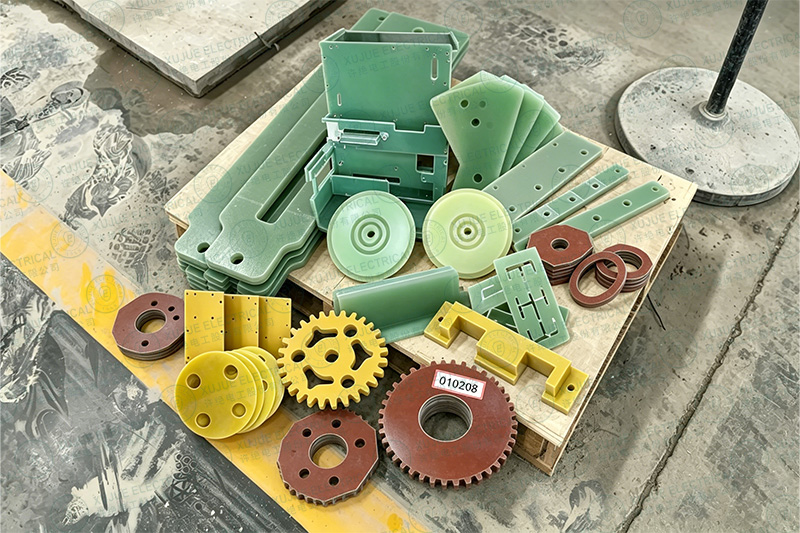
6 Key Factors for Selecting CNC Machinable Insulation Materials
When selecting electrical insulation materials for CNC machining, insulation performance is only the baseline—machinability is the real key.
1. Mechanical Strength & Interlaminar Bonding
Strong internal bonding prevents:
• Edge cracking
• Layer separation during milling or drilling
Materials with balanced rigidity improve vibration resistance and machining stability.
2. Machinability & Cutting Performance (Critical)
This determines machining efficiency and surface quality.
Focus on:
• Clean edge finishing after milling
• Resistance to cracking and fiber tearing
• Stability in repeated machining
Ignoring machinability = high scrap rate + low efficiency
3. Thermal Resistance (Machining + Application)
Many users only consider continuous operating temperature, but machining generates localized heat at cutting edges.
You must evaluate:
• Continuous working temperature
• Short-term heat resistance
• Resistance to machining heat
Otherwise → resin degradation, deformation, or failure
4. Dimensional Stability & Tolerance Control
Critical for precision parts.
Avoid materials that are:
• Moisture-sensitive
• High internal stress
• Structurally unstable
For tight tolerance parts, choose dimensionally stable insulation materials for CNC machining.
5. Electrical Insulation Performance After Machining
Machining may introduce:
• Micro-cracks
• Surface defects
These can reduce dielectric performance in high-voltage applications.
Always consider post-machining insulation reliability, not just raw material specs.
6. Durability & Load-Bearing Capacity
Match material performance with:
• Mechanical load
• Long-term wear
• Environmental stress
This ensures long service life.
Best Insulation Materials for CNC Machining
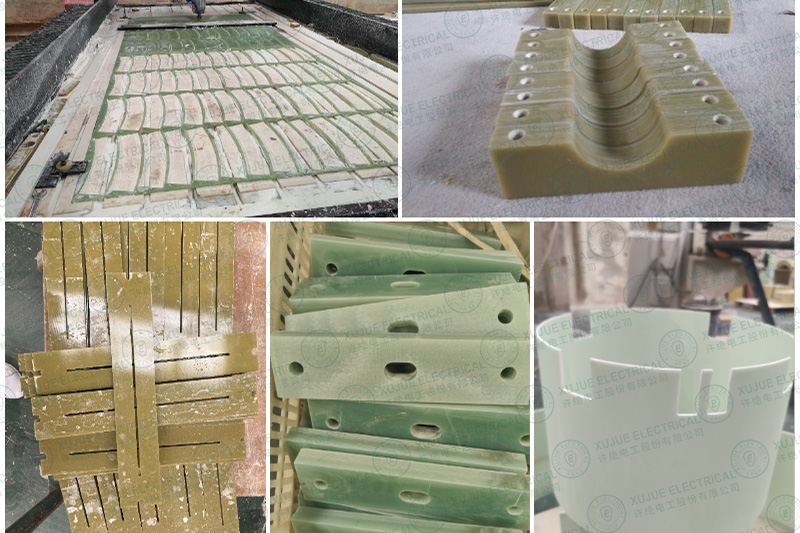
1. FR4 / G10 Epoxy Fiberglass Laminates
Best all-around choice
• Excellent machinability
• High mechanical strength
• Stable dimensions
• Strong electrical insulation
Ideal for:
• Electrical insulation components
• Structural parts
• Precision machined insulation parts
2. G11 High-Temperature Epoxy Laminates
Designed for high-temperature environments
• Similar machinability to FR4
• Superior thermal resistance
Best for:
• High-temperature electrical insulation components
3. Phenolic Laminates
Cost-effective option:
• Good electrical insulation
• Lower machinability (brittle)
Suitable for:
• Simple geometry parts
• Medium tolerance applications
Not suitable for precision CNC machining
4. UPGM203 (Glass Fiber Reinforced Polyester)
• High mechanical strength
• Excellent arc resistance
But:
• Causes higher tool wear
Best for:
• Load-bearing insulation components
5. Silicone Fiberglass Laminates
• Excellent thermal stability
• Suitable for high-temperature environments
Requires conservative machining parameters
6. Mica Sheets (Rigid / Flexible)
• Outstanding heat resistance
Rigid mica:
• CNC machinable (simple shapes only)
Flexible mica:
• Not suitable for precision machining
Practical Material Selection Workflow
Instead of guessing, define your application first:
Ask these 4 key questions:
1. What is the operating temperature range?
(Thermal resistance)
2. What insulation level or voltage requirement is needed?
(Electrical performance)
3. What mechanical load or stress will the part face?
(Strength & durability)
4. What tolerance and geometry complexity are required?
(Machinability & stability)
Then match material properties accordingly.
Common Mistakes to Avoid
Mistake 1: Only Looking at Temperature Ratings
Result:
• Resin degradation during machining
Mistake 2: Ignoring Machinability
Result:
• High tool wear
• Low efficiency
Mistake 3: Designing Complex Parts with Brittle Materials
Result:
• Chipping, delamination
Mistake 4: Choosing Cheapest Material Only
Result:
• Higher scrap cost → higher total cost
• CNC Machining Tips for Insulation Materials
To achieve optimal results:
• Use specialized cutting tools for composite materials
• Optimize feed rate and cutting depth
• Implement proper dust extraction systems
This ensures:
• Better surface finish
• Stable dimensions
• Longer tool life
Conclusion
Selecting the right CNC machinable insulation material is a balance of:
• Mechanical strength
• Thermal resistance
• Machinability
Application requirements
Materials like FR4, G10, G11, phenolic laminates, UPGM203, silicone fiberglass, and mica each serve specific applications.
The key is simple:
Match the material to the real working condition—not just datasheet values.
With the right selection strategy, manufacturers can:
• Reduce machining risk
• Improve product consistency
• Achieve high-quality, cost-effective production